
Please Choose Your Language
close
Choose Your Site
Global
Social Media
Views: 0 Author: Site Editor Publish Time: 2025-11-23 Origin: Site


When working with machinery that includes moving parts, one of the most critical aspects often overlooked is the cable that connects those moving components. Flexible cables are designed to withstand the stresses of dynamic movements, ensuring power, signal transmission, and longevity in environments where traditional cables might fail. In this article, we’ll delve into the importance of flexible cables in moving part connections, their key features, and how they contribute to enhancing machinery performance and reducing downtime. Shenzhen SiRON Electrical Co., Ltd. specializes in the development and manufacturing of high-quality flexible cables, offering innovative solutions for industries in need of reliable and durable wiring systems.
The performance of machines and systems that involve moving parts heavily depends on the integrity and reliability of their connections. A cable that’s not built for movement will quickly show signs of wear, leading to breakdowns and costly repairs. Flexible cables specifically address these challenges by providing the durability, resilience, and flexibility necessary to handle constant motion without compromising performance.
In this article, we will explore how flexible cables are essential for the operation of machinery with moving parts. We will also look at key features to look for in a high-quality cable and how to match the right flexible cable to your machine’s specific needs. Lastly, we will discuss why flexible cables are a smarter choice for moving parts in industrial, automation, and robotics applications.
A flexible cable is designed specifically to endure frequent bending, twisting, and flexing without compromising its performance or integrity. Unlike standard cables that are intended for stationary applications, flexible cables are built with materials and construction methods that allow them to handle dynamic movements. This feature makes them especially important for machines with moving parts, such as industrial robots, automated machinery, or even cranes that require reliable and constant power or data connections.
The key difference between a flexible cable and a traditional one lies in its construction. A flexible cable typically consists of finer, more resilient strands of wire that can flex and move without breaking. This is crucial in applications like moving part connections, where constant movement would quickly degrade standard wiring. With the added layers of insulation and jackets designed for dynamic use, flexible cables ensure minimal wear, keeping operations smooth and reducing the risk of malfunctions due to cable failure.
Moreover, a flexible cable is often designed to minimize mechanical stresses such as bending, tension, and torsion. This is important because the movement of parts in machinery can cause the cables to stretch, twist, and bend frequently, which could lead to the breakdown of standard cables. The resilience of flexible cables is tested for millions of cycles, and they can handle these movements over time without significant damage, unlike ordinary cables that would easily fray and break under such conditions.
The performance of a machine with moving parts depends heavily on the reliability of the cable connections that power and control those parts. Incorrect cable selection can lead to several issues, including frequent breakdowns, high maintenance costs, and system failures, which ultimately affect productivity.
A reliable flexible cable minimizes downtime and ensures the system remains operational for longer periods. If the wrong type of cable is used, it can wear out quickly, leading to unexpected failures in machinery. For example, in a robotic arm, the cable carrying power to the motors must be able to withstand millions of cycles of bending and twisting. Otherwise, the cable may crack, short-circuit, or lose its conductivity, causing the robotic arm to stop working.
Moreover, flexible cables ensure that data and power signals are transmitted without interruption even during high-movement scenarios. They are designed to maintain signal integrity, whether it’s a sensor transmitting data to a central processor or a motor receiving power to continue its operations. Without a proper flexible cable, these connections could be interrupted, leading to data loss or power failure. This reliability is particularly important in industries where high uptime is critical to maintaining operations.
Additionally, flexible cables are often built with durability in mind. They can resist environmental factors such as oil, dust, extreme temperatures, and mechanical stresses. In industries like manufacturing or automotive, where equipment often operates in harsh conditions, choosing the right flexible cable can mean the difference between long-lasting performance and constant repairs. For example, a flexible cable in a crane’s moving part connection must be resistant to exposure to the elements, such as rain, snow, and extreme heat, while maintaining its performance.
One of the key benefits of a flexible cable is its ability to maintain a high level of performance under stress, which is essential in applications where continuous motion and high workloads are common. With robust construction and high-grade materials, flexible cables can endure the daily challenges of moving part connections without showing signs of degradation.
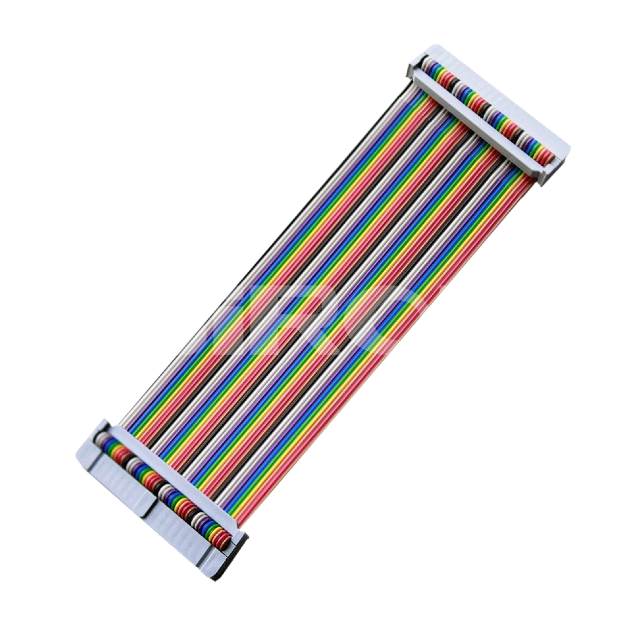
When selecting a flexible cable for moving part connections, there are several key design features that determine how well the cable will perform under dynamic conditions.
Conductor construction is the first factor to consider. Flexible cables typically feature finer wire strands (often class 5 or 6), allowing for greater flexibility and movement. These finer strands reduce the chances of breakage under repeated motion and prevent the cable from losing its conductivity due to strain. A high-quality flexible cable uses advanced conductor materials such as copper to ensure minimal resistance and optimal power or data transmission.
Jacket and insulation materials are also vital. A cable’s outer jacket protects it from environmental factors such as abrasion, oils, and chemicals. For moving parts, the jacket material should be durable enough to withstand constant rubbing or friction against surfaces, while also being resistant to environmental hazards like moisture, heat, or corrosion. Moreover, the jacket material should have excellent tear and wear resistance to ensure the cable remains intact under constant movement.
Another critical design feature is the flex-cycle rating. The flex-cycle rating indicates how many times the cable can be bent or twisted before it starts to show signs of wear. Cables designed for moving parts should have a high flex-cycle rating to ensure long-term performance. A cable with a high cycle rating will provide optimal performance even when subjected to constant, repetitive movements. Additionally, bending radius is important, as it dictates how tightly the cable can be bent without damaging the internal structure. A well-designed flexible cable will allow for a smaller bending radius, ensuring smooth movement without kinking or breaking.
Finally, connector/strain relief is essential for maintaining the integrity of the connection. Cables used in dynamic applications must be able to withstand the forces exerted on them as they move. Proper strain relief ensures that the cable remains securely connected to the machinery and prevents it from being pulled or twisted in ways that could damage the cable or the equipment it is connected to.
When selecting the right flexible cable for your application, it’s essential to first assess the specific movement and environmental conditions the cable will face.
Start by identifying the type of motion. Will the cable be subjected to linear movements, rotational movements, or twisting? Each type of motion will put different stresses on the cable, and choosing a cable designed for that specific motion will enhance its longevity and reliability. A flexible cable meant for twisting applications will need a different design than one used for simple back-and-forth motion.
Next, determine the environment in which the cable will operate. Is the environment high in temperature, or does it involve exposure to chemicals, moisture, or UV light? Depending on these factors, the material composition of the cable’s jacket and insulation will need to be selected to match the environmental stresses. A cable used in an outdoor setting exposed to the sun will need UV-resistant materials, while a cable in an industrial setting might require resistance to oils and solvents.
It’s also crucial to estimate the duty cycle and required service life of the cable. How many times will the cable need to bend or twist before it is replaced? This can vary depending on the machinery’s use—robots may require cables that can handle millions of flexing cycles, while other machinery may only need a few thousand. Make sure to choose a flexible cable with the appropriate flex-cycle rating for your specific application.
Finally, working closely with your supplier, like Shenzhen SiRON Electrical Co., Ltd., can ensure that the cable meets all the necessary specifications for your moving part connection. Custom lengths, pre-assembly, and testing can all be arranged to meet your specific needs.
Choosing the right flexible cable for moving part connections is essential for ensuring long-term, reliable performance of machinery. The wrong cable can lead to frequent breakdowns and increased maintenance costs, while the right cable ensures smooth operations and minimal downtime. At Shenzhen SiRON Electrical Co., Ltd., we offer a range of high-quality flexible cables that are designed to meet the demands of dynamic applications. Whether you're working in robotics, industrial machinery, or other fields with moving parts, our cables provide the durability, flexibility, and reliability needed for optimal performance.
If you have any questions or are looking for a cable solution for your moving part connection needs, don’t hesitate to contact us for further information and assistance.
1. What is the difference between flexible cables and regular cables?
Flexible cables are designed with finer, more resilient strands of wire that allow them to bend, twist, and flex repeatedly without breaking, unlike standard cables which are designed for stationary use.
2. Can flexible cables handle high-temperature environments?
Yes, flexible cables can be designed to withstand high-temperature environments by using specialized insulation and jacket materials that offer heat resistance.
3. How do I choose the right flexible cable for my machine’s moving parts?
You need to assess the type of movement (linear, rotational, etc.), environmental factors (oil, moisture, heat), and the required cycle life before selecting a flexible cable.
4. How long can a flexible cable last in a moving part application?
The lifespan of a flexible cable depends on its design, the amount of movement it undergoes, and the conditions it is exposed to. High-quality flexible cables can last for millions of cycles with minimal wear.


