
Please Choose Your Language
close
Choose Your Site
Global
Social Media
Views: 0 Author: Site Editor Publish Time: 2025-11-23 Origin: Site


In today’s highly automated industrial environments, Ethernet cables play a crucial yet often overlooked role in enabling efficient communication between machines and systems. The integration of automation network communication technologies has transformed factories, allowing for real-time monitoring, control, and optimization of production processes. The Ethernet cable is the backbone that supports these communication networks, ensuring data flows seamlessly across various devices. For companies looking to build or upgrade their automation systems, selecting the right Ethernet cable is not just about functionality but also about ensuring the stability, reliability, and future-proofing of their infrastructure. Shenzhen SiRON Electrical Co., Ltd., a leader in providing high-quality electrical solutions, offers a range of Ethernet cables specifically designed for the demanding needs of industrial automation.
Automation network communication refers to the exchange of data between various devices within a networked system, which is fundamental in modern manufacturing plants. It encompasses everything from sensors and actuators to complex control systems that regulate production lines. The data transmitted across these networks is used to monitor performance, trigger actions, and provide real-time insights into operational efficiency.
In an automated factory, the flow of data must be both reliable and fast. Devices need to communicate with each other and with central control systems without interruption. This is where Ethernet networks come in, as they offer a standardized and scalable solution for connecting a wide range of devices, enabling seamless communication. Ethernet is no longer just for office networks but has become the standard for industrial automation, allowing manufacturers to build more robust and flexible systems.
While Ethernet cables may appear similar to those used in home or office networks, industrial Ethernet cables are built to withstand harsh environments that are common in manufacturing settings. These environments often feature extreme temperatures, high humidity, vibrations, and electromagnetic interference (EMI). Industrial Ethernet cables are designed with special coatings, shielding, and durable materials to prevent damage and ensure stable communication even in the toughest conditions.
This durability is particularly important for automation systems that need to operate continuously without failure. A single point of failure in the network can cause significant downtime, leading to costly delays and reduced productivity. Using high-quality Ethernet cables specifically designed for industrial applications reduces the risk of such failures, ensuring that the communication infrastructure remains reliable and effective.
Ethernet cables are designed to deliver high-speed data transmission with minimal latency, making them ideal for automation networks where real-time communication is crucial. The speed of the Ethernet cable is important because it affects how quickly devices can exchange data. Latency refers to the delay between sending and receiving data, and low latency is essential for time-sensitive applications such as machine control or robotics. Furthermore, the reliability of the cable’s signal integrity, particularly in the presence of electromagnetic interference (EMI), is crucial for maintaining consistent performance across the network.
The performance characteristics of Ethernet cables directly impact the effectiveness of an automation network. A slow or unreliable connection can disrupt the communication between machines, leading to delays, malfunctions, or even costly production halts. Therefore, choosing the right Ethernet cable that meets the required speed, latency, and reliability standards is crucial for any company looking to invest in automation.
Using the right Ethernet cables in industrial automation not only ensures smoother communication but also provides additional benefits in terms of network diagnostics and maintenance. Ethernet cables support advanced diagnostic tools that allow operators to monitor the health of the network and quickly identify any issues that may arise. For example, cable integrity and performance can be monitored remotely, reducing the need for physical inspections and enabling predictive maintenance.
Additionally, Ethernet-based automation networks allow for quicker troubleshooting. In the event of a fault, operators can pinpoint the exact location of the issue with ease, minimizing downtime and reducing repair costs. This level of diagnostic capability would be difficult to achieve with traditional, non-networked control systems, where troubleshooting often requires manual intervention.
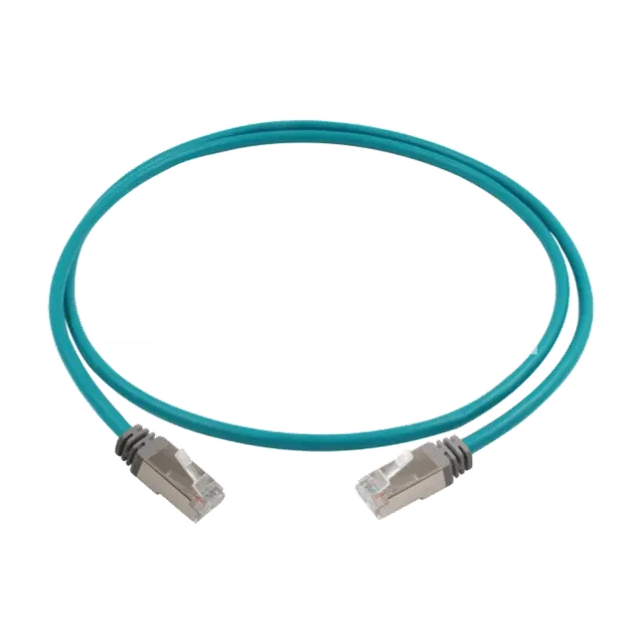
The first step in selecting the appropriate Ethernet cable for your automation network is to understand the environment in which it will be used. Industrial environments differ significantly from office or residential settings. Factors such as temperature extremes, chemical exposure, vibration, and outdoor exposure all need to be considered. Ethernet cables used in factories must be resistant to these conditions, ensuring long-term reliability and preventing failure due to harsh conditions.
For example, cables exposed to outdoor elements must be weather-resistant and able to handle temperature fluctuations. Similarly, cables running along factory floors or in areas with heavy machinery must be shielded from mechanical wear and tear, as well as EMI caused by the operation of nearby equipment.
The next step in choosing the right Ethernet cable is to consider its category, shielding, and connector types. Ethernet cables are categorized into different classes, such as Cat5e, Cat6, and Cat6A, each offering different speed and performance characteristics. For automation networks, higher-category cables like Cat6A or even Cat7 may be needed to support higher bandwidth and lower latency requirements.
In addition to category, shielding plays a critical role in protecting the cable from EMI and cross-talk from other cables. In industrial settings, shielded cables (STP or FTP) are preferred over unshielded cables (UTP) due to their ability to block out interference. Furthermore, the connector type should be compatible with the equipment in use—M12 connectors, for example, are commonly used in industrial automation because of their durability and ability to handle rugged conditions.
When selecting Ethernet cables for automation networks, it’s essential to consider future needs. As Industry 4.0 and the Industrial Internet of Things (IIoT) continue to grow, the number of connected devices and the demands on network infrastructure will increase. Therefore, investing in higher-performance cables that can handle more devices, faster speeds, and higher data volumes is a smart decision.
Choosing Ethernet cables that support the latest standards and technologies ensures that your network can scale as needed without requiring a complete overhaul. Additionally, cables designed to accommodate future protocols can reduce the need for frequent upgrades, saving both time and money in the long run.
One of the most common mistakes made when selecting Ethernet cables for automation networks is under-specifying the cable. Many companies opt for lower-cost, lower-performance cables that are unsuitable for industrial environments. These cables may work initially but can fail over time, leading to costly downtime and repairs. It is essential to choose Ethernet cables that meet the performance and durability standards required for automation networks, rather than opting for cheaper, less durable alternatives.
Another mistake is failing to consider the network architecture and specific communication protocol needs of the automation system. Some networks may rely on real-time protocols like EtherNet/IP or PROFINET, which require cables with low latency and high reliability. Ignoring these needs can result in poor network performance, reduced communication speed, and potential network failures.
It is also important not to overlook the need for easy maintenance and future upgrades when selecting Ethernet cables. Industrial networks are constantly evolving, and choosing cables that are easy to replace or upgrade can save time and reduce maintenance costs in the future.
One of the latest advancements in Ethernet technology is Single-Pair Ethernet (SPE). Unlike traditional Ethernet cables, which use four pairs of wires, SPE uses only a single pair to transmit data. This reduces the cable size and weight, making it ideal for use with field devices in harsh industrial environments. SPE is particularly useful for applications where space is limited, such as in robotics or remote sensors.
As industrial automation becomes more advanced, the demand for ultra-reliable communication grows. Time-Sensitive Networking (TSN) is a new standard that ensures real-time communication with minimal delay, making it essential for time-critical applications like machine control or robotics. Ethernet cables designed to support TSN offer high-performance, low-latency communication that is essential for these applications.
Finally, there is a growing trend toward sustainability and modularity in cable design. Manufacturers are increasingly looking for Ethernet cables that are not only high-performing but also environmentally friendly. Cables made from recyclable materials or those designed for easy installation and replacement are becoming more popular in automation networks.
As automation networks continue to evolve, Ethernet cables remain a critical component for ensuring reliable, high-performance communication between devices. Selecting the right Ethernet cable for your industrial automation system is key to maximizing network efficiency, minimizing downtime, and future-proofing your infrastructure. Shenzhen SiRON Electrical Co., Ltd. offers a range of high-quality Ethernet cables tailored to the specific demands of automation network communication. By choosing the right cables for your needs, you ensure that your automation system can grow and evolve with your business.
For more information on our Ethernet cables and other industrial networking solutions, contact us today!
What is the best Ethernet cable for industrial automation?
Industrial-grade cables such as Cat6A or Cat7 with shielding and high durability are best for automation networks.
Can Ethernet cables be used for both office and industrial settings?
Ethernet cables designed for industrial settings are more robust and can handle harsher conditions, making them suitable for factory floors.
What is the difference between Cat6 and Cat6A cables in automation?
Cat6A cables provide higher bandwidth and are better suited for automation systems that require high-speed data transfer.
How does shielding help in Ethernet cables for industrial use?
Shielding protects the cable from electromagnetic interference (EMI), which is common in industrial environments.


