
Please Choose Your Language
close
Choose Your Site
Global
Social Media
Views: 0 Author: Site Editor Publish Time: 2026-01-19 Origin: Site


Proximity sensors have revolutionized industrial automation by offering a non-contact method of detecting objects. Unlike traditional sensors, which rely on physical touch or mechanical triggers, proximity sensors provide a more accurate, reliable, and longer-lasting alternative. These sensors have become indispensable in industrial environments where precision and safety are crucial. At SiRON Electrical, we manufacture high-quality industrial sensors designed to ensure optimal performance and precision. Our proximity sensors are built to withstand the harshest factory environments, providing seamless integration with automated systems to enhance overall efficiency. In this article, we will explore how proximity sensors function, their applications, and their benefits in various industries.
Proximity sensors are electronic devices designed to detect the presence of nearby objects without any physical contact. This non-contact sensing technology has made them essential in industries where precision and speed are necessary. By emitting a signal (electromagnetic, ultrasonic, or capacitive), proximity sensors can detect changes in the environment, such as the approach of an object, without touching it.
Working Principle:
The basic operation of a proximity sensor involves emitting a signal—either electromagnetic or sound waves—and then detecting changes when an object enters its detection range. This process eliminates the need for physical interaction with the object, making it ideal for use in high-speed, high-precision industrial processes.
Inductive Proximity Sensors: These sensors detect metallic objects using electromagnetic fields. They are typically used in applications where only metals need to be detected, such as metal part sorting or machine automation.
Capacitive Proximity Sensors: These sensors work by detecting changes in capacitance caused by the proximity of objects. They can detect both metallic and non-metallic objects like plastic, glass, or liquids. These sensors are commonly used in industries dealing with liquids or powders.
Ultrasonic Proximity Sensors: Ultrasonic sensors use sound waves to detect objects. They are suitable for applications that require distance measurement and can work in harsh environmental conditions. For example, in outdoor environments, ultrasonic sensors are often used to measure the distance between an object and a sensor.
Each type of proximity sensor serves specific applications based on the material properties of the objects to be detected and the environmental conditions.
In today’s manufacturing world, proximity sensors offer several key benefits that optimize processes, improve safety, and increase overall operational efficiency.
Accurate Detection of Moving Parts:
In an automated manufacturing environment, accurately tracking moving parts is essential. Proximity sensors provide real-time information about the location of moving objects, allowing automated systems to make precise adjustments. This accuracy helps improve the speed and efficiency of assembly lines, ensuring that parts are in the correct position for subsequent operations.
Enhance Safety by Preventing Accidents:
Safety is a primary concern in industrial environments, especially in factories with automated machines. Proximity sensors can be used to detect the presence of humans or other obstacles within dangerous areas of machinery. When a human operator approaches a potentially hazardous machine, the proximity sensor triggers an automatic shutdown or warning, preventing accidents and injuries.
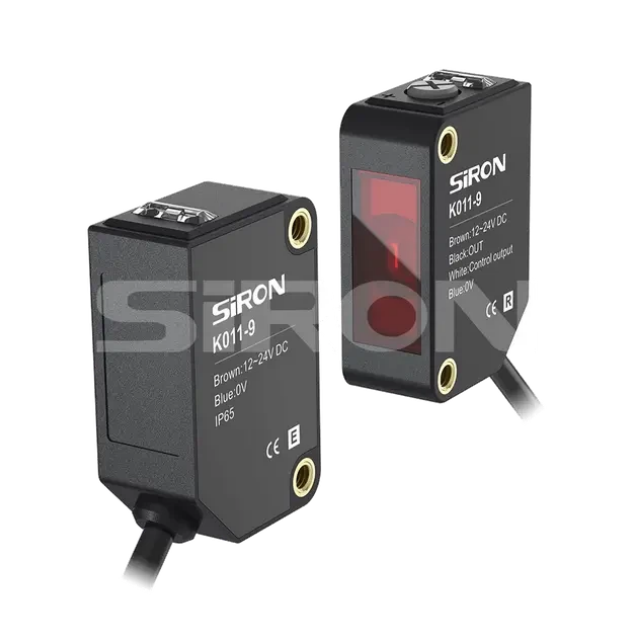
The versatility of proximity sensors makes them indispensable in many industries. Below are some of the most common applications:
Industry | Application of Proximity Sensors |
Automotive | Proximity sensors are used to detect the position of automotive parts during assembly, ensuring precise placement of components. They are also used in robotic arms for assembling delicate parts without causing damage. |
Electronics Manufacturing | In the electronics industry, proximity sensors are employed to detect small components on high-speed assembly lines. These sensors help ensure that parts are correctly placed, improving the speed and accuracy of production. |
Packaging | Proximity sensors are widely used in the packaging industry to detect products on conveyor belts, enabling automatic sorting, labeling, and packaging of goods. This boosts efficiency and reduces human error. |
Food Processing | In food production, proximity sensors help with the precise detection of products and ingredients, ensuring consistency in food packaging and safety in operations where contamination is a concern. |
Material Handling | Proximity sensors are used to track the movement of materials in warehouses or distribution centers, ensuring efficient loading, unloading, and sorting of products. |
As shown in the table above, proximity sensors play a crucial role in industries ranging from automotive manufacturing to food processing, where high levels of automation and precision are required.
Non-contact positioning, as provided by proximity sensors, offers several significant advantages over traditional contact-based sensors. These advantages are crucial for ensuring the longevity, reliability, and efficiency of the sensors.
Increased Sensor Lifespan:
Because proximity sensors do not physically touch the object being detected, they avoid the wear and tear that traditional sensors experience. This results in a longer lifespan for the sensors, which ultimately reduces the need for frequent replacements or repairs, saving companies both time and money.
Reduced Maintenance:
The non-contact nature of proximity sensors means they are less susceptible to damage, thus reducing maintenance needs. Sensors that rely on physical contact or mechanical parts are more prone to failure over time. By using proximity sensors, companies can reduce downtime and maintain consistent production rates without frequent sensor servicing.
Avoiding Wear and Tear:
Proximity sensors operate without physically touching the objects they detect, which minimizes the mechanical wear that often occurs with traditional contact-based sensors. This means that they remain accurate and effective for longer periods, even in environments where other types of sensors would degrade.
One of the key advantages of proximity sensors is their seamless integration with automated systems, particularly Programmable Logic Controllers (PLCs). This integration is critical for achieving real-time feedback, data processing, and control.
Connection with PLC Systems:
Proximity sensors can be easily connected to PLC systems for real-time monitoring. When a sensor detects the presence or position of an object, it sends a signal to the PLC, which then processes this data to make necessary adjustments to the system. This could involve stopping a conveyor belt, triggering a robotic arm to move, or making changes to machine speeds.
Real-time Data Processing and Control:
By providing real-time data, proximity sensors allow PLC systems to respond immediately to changes in the production environment. This helps to prevent errors, optimize workflows, and ensure that production lines remain uninterrupted. Additionally, the continuous feedback provided by proximity sensors makes it easier to monitor system performance and make adjustments as needed.
In conclusion, proximity sensors are integral to the efficiency and safety of industrial operations. These sensors provide accurate, reliable, and non-contact solutions that enhance automation, reduce maintenance costs, and improve overall safety in various industries. With their ability to detect objects without physical contact, proximity sensors offer an effective way to optimize production processes and enhance operational performance. SiRON Electrical manufactures high-quality industrial sensors that integrate seamlessly with your automated systems. Contact us today to learn how our proximity sensors can enhance the precision and reliability of your operations.
1. What are the different types of proximity sensors?
The three main types of proximity sensors are inductive, capacitive, and ultrasonic, each serving different applications based on the material of the object and environmental factors.
2. How do proximity sensors improve safety in industrial environments?
Proximity sensors prevent accidents by detecting the presence of operators or objects in dangerous areas, triggering automatic shutdowns or warnings.
3. Can proximity sensors be integrated with PLC systems?
Yes, proximity sensors can be connected to PLC systems for real-time data processing and control, ensuring automated adjustments to the production process.
4. What are the benefits of non-contact positioning?
Non-contact positioning through proximity sensors increases sensor lifespan, reduces maintenance costs, and avoids mechanical wear, making them more durable and efficient.


