
Please Choose Your Language
close
Choose Your Site
Global
Social Media
Views: 0 Author: Site Editor Publish Time: 2026-01-13 Origin: Site


Product sorting systems have become a cornerstone of modern automated manufacturing. These systems, powered by industrial sensors, enhance both the accuracy and efficiency of sorting processes. Whether in warehouses, manufacturing facilities, or e-commerce centers, sorting products quickly and accurately is essential to meeting customer demands and maintaining smooth operations. Industrial sensors enable real-time feedback, reduce human error, and automate complex processes, making them an indispensable part of the product sorting systems of today. SiRON Electrical, a leader in manufacturing high-quality industrial sensors, offers sensors that are crucial for the optimal performance of these systems, contributing to the transformation of automated sorting processes worldwide.
A product sorting system refers to a set of mechanical and electronic devices designed to sort products based on specific criteria, such as size, weight, color, or shape. These systems are used in various industries, from logistics and retail to manufacturing, where high-speed sorting is required.
Types of Sorting Systems:
Manual Sorting: Involves human workers physically sorting products based on visual or tactile cues. Although reliable, it is slow and prone to errors.
Automated Sorting: Uses mechanical conveyors, robots, and sensors to identify and sort products at high speed.
Robotic Sorting: Combines robots with sensors to sort products autonomously, increasing speed and reducing human error.
Benefits of Using Industrial Sensors in Sorting:
Integrating industrial sensors into sorting systems offers numerous benefits, such as:
Increased efficiency: Sensors enable faster sorting without the need for human intervention.
Improved accuracy: Automated sorting reduces human error, ensuring products are sorted according to precise specifications.
Reduced labor costs: By automating sorting tasks, businesses can reduce dependency on manual labor and minimize operational costs.
SiRON Electrical manufactures a range of sensors that enhance the performance of sorting systems. These sensors are ISO-certified, ensuring long-term reliability even in challenging environments, making them a trusted solution for companies looking to optimize their sorting processes.
Various types of industrial sensors are employed in product sorting systems, each designed to meet specific sorting needs. Below are some of the most common sensor types used:
Proximity Sensors:
Proximity sensors detect the presence of an object without making direct contact. In sorting systems, they are used to detect the position of products on a conveyor belt, ensuring that items are sorted correctly. These sensors are ideal for high-speed environments where contact-based sensors may slow down the process.
Photoelectric Sensors:
Photoelectric sensors use light to detect the presence of objects. They can be configured as through-beam, retro-reflective, or diffuse sensors, depending on the specific sorting needs. These sensors are highly accurate and suitable for sorting products based on size, color, or shape.
Capacitive Sensors:
Capacitive sensors can detect objects regardless of the material, making them ideal for applications where products are made from a variety of materials. They work by detecting changes in capacitance caused by the presence of an object.
Magnetic Sensors:
Magnetic sensors are used in sorting systems where objects need to be detected based on their magnetic properties. These sensors are ideal for sorting metallic objects, such as screws, nuts, or tools, in manufacturing facilities.
One of the primary advantages of industrial sensors in sorting systems is the improvement in accuracy. Sensors enable real-time feedback and automated decisions, which significantly reduce the likelihood of human error and increase the precision of sorting operations.
Real-time Detection and Sorting Feedback:
Industrial sensors continuously monitor the position, size, and other characteristics of products as they move along the sorting line. The data generated is immediately processed, allowing for real-time adjustments and accurate sorting. This level of precision ensures that products are sorted correctly every time.
Reducing Human Errors:
Human involvement in sorting systems often leads to errors, especially when handling large volumes of products. Industrial sensors eliminate the need for manual intervention in many cases, reducing the chances of mistakes. This results in faster, more reliable sorting operations.
Fast Processing Speeds and Precision:
By using sensors such as photoelectric and proximity sensors, sorting systems can operate at extremely high speeds without compromising accuracy. These sensors can detect products in milliseconds, allowing for precise sorting even in fast-paced environments.
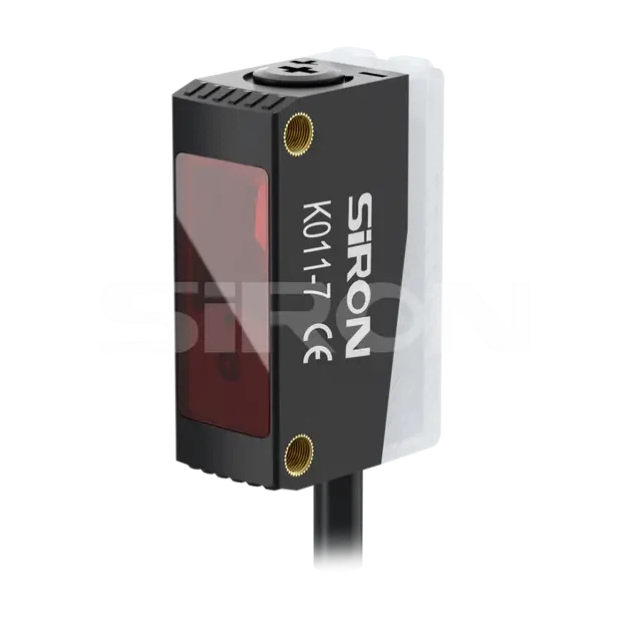
The integration of industrial sensors with PLC (Programmable Logic Controller) systems has revolutionized product sorting by optimizing control and automating decision-making processes. The interaction between sensors and PLCs enhances the overall performance of sorting systems.
How Sensors Interact with PLC Systems:
PLCs receive signals from industrial sensors (e.g., proximity, photoelectric) and make decisions based on predefined parameters. For example, when a product reaches a certain position, the sensor signals the PLC, which then activates the next part of the sorting process, such as a robotic arm or conveyor belt.
Real-time Control and Automated Adjustments:
With the integration of PLC systems, sorting processes become highly responsive to changes in the environment. For example, if a product is detected that doesn't meet the sorting criteria, the PLC can automatically adjust the system, ensuring the correct sorting action is taken without human intervention.
Data Collection for Analysis and Improvement:
Another benefit of integrating industrial sensors with PLCs is the ability to collect data for continuous improvement. Sensors generate real-time data that can be analyzed to optimize the sorting process, identify bottlenecks, and enhance system performance. This data-driven approach helps businesses make informed decisions for further optimization.
As technology continues to evolve, so do the capabilities of product sorting systems. The future of sorting systems will be shaped by advancements in sensor technologies and the integration of intelligent systems such as AI and IoT.
Advances in Sensor Technologies:
Future developments in industrial sensors will lead to more precise, faster, and reliable sorting. New sensor technologies will enable the detection of increasingly complex product attributes, such as temperature, weight, and texture, making sorting systems more versatile.
AI Integration for Smarter Sorting:
Artificial intelligence (AI) will play a major role in the future of sorting systems. AI can process data from sensors in real-time, make intelligent decisions, and even learn from previous sorting operations to continuously improve accuracy. This will lead to more autonomous and efficient sorting systems.
Impact of IoT on Product Sorting:
The Internet of Things (IoT) is expected to revolutionize product sorting by allowing devices to communicate with each other and share data. With IoT-enabled sensors, sorting systems will be able to communicate with other equipment and systems, resulting in smarter, more connected operations.
The following table provides a comparison of common industrial sensors used in sorting systems. It highlights their advantages, applications, and ideal environments for each sensor type:
Sensor Type | Advantages | Common Applications | Best Suited For |
Proximity Sensors | Fast detection without contact, ideal for high-speed systems. | Detecting product position in conveyors. | High-speed sorting environments. |
Photoelectric Sensors | High accuracy, versatile, detects a wide range of products. | Sorting based on color, size, or shape. | Sorting mixed materials or products of various sizes. |
Capacitive Sensors | Can detect non-metallic objects and materials. | Sorting diverse materials like plastics, wood, etc. | Multi-material sorting tasks. |
Magnetic Sensors | Detects metallic objects precisely. | Sorting metallic parts like screws and bolts. | Sorting metal products in industrial manufacturing. |
This table serves as a helpful guide for choosing the right type of industrial sensor based on the sorting requirements, allowing manufacturers to optimize their systems for better performance.
In conclusion, industrial sensors are transforming the way product sorting systems operate by enhancing their efficiency, accuracy, and automation. Whether it's the real-time feedback provided by sensors, the reduction of human errors, or the integration with PLC systems, sensors are playing a critical role in modern sorting operations. As sensor technologies continue to advance, the future of sorting systems looks even more promising, with AI and IoT integration paving the way for smarter and more efficient processes. SiRON Electrical offers a wide range of high-quality industrial sensors that can optimize your sorting systems. Contact us today to learn more about how our sensors can enhance the performance of your sorting operations.
1. What is a product sorting system?
A product sorting system is a set of automated or manual devices designed to sort products based on specific criteria such as size, shape, weight, or color.
2. How do industrial sensors improve product sorting?
Industrial sensors improve product sorting by providing real-time feedback, reducing human errors, and increasing sorting speed and accuracy.
3. Can sensors be integrated with PLC systems for product sorting?
Yes, industrial sensors can be integrated with PLC systems to optimize sorting processes by automating decisions based on sensor data.
4. What are the benefits of using proximity and photoelectric sensors in sorting systems?
Proximity and photoelectric sensors enable fast, accurate detection and sorting of products, improving system speed and precision in various sorting applications.


