
Please Choose Your Language
close
Choose Your Site
Global
Social Media
Views: 0 Author: Site Editor Publish Time: 2026-01-20 Origin: Site


In the world of industrial automation, industrial sensors have become a cornerstone for ensuring precision and efficiency in processes that rely on accurate object detection. Unlike traditional mechanical sensors, photoelectric sensors work by detecting objects without making physical contact, using light instead. This not only enhances their lifespan but also boosts the reliability and speed of operations. As industries grow more automated, the demand for such non-contact sensing technologies continues to rise, especially for applications in packaging, robotics, and conveyor systems. In this article, we explore the profound impact photoelectric sensors have on improving productivity and operational performance, and how they’re helping industries optimize their processes.
A photoelectric sensor is a type of industrial sensor that detects the presence or absence of an object using light. These sensors use a beam of light to detect the object and can work through various light technologies, including visible light, infrared light, or even ultraviolet light. The sensor works by emitting a light beam that reflects off the object and returns to the sensor. If the object interrupts the light beam, it is detected by the sensor and a signal is sent to the control system.
Through-Beam Photoelectric Sensors: These sensors consist of two components: an emitter and a receiver. The emitter sends out a beam of light, and the receiver detects the light. If the beam is interrupted by an object, the sensor will trigger a response. Through-beam sensors are known for their long-range detection capabilities and high precision.
Retro-Reflective Photoelectric Sensors: These sensors also use an emitter and a receiver but are housed in a single unit. The light beam emitted by the sensor reflects off a special reflector placed on the opposite side of the sensor. If an object interrupts the light beam, the sensor detects the interruption and generates an output signal. These sensors are ideal for applications where space is limited.
Diffuse Photoelectric Sensors: These sensors have the emitter and receiver combined in one unit, and they detect objects by measuring the light reflected directly from the object. Diffuse sensors are commonly used in applications where the object needs to be detected at a closer range.
These different types of sensors serve specific purposes, depending on the application and the environment in which they are used.
Photoelectric sensors have a wide range of applications in various industries, making them incredibly versatile and valuable in industrial automation. Below are a few examples of where they are commonly used:
Packaging Lines: In the packaging industry, photoelectric sensors are used to detect the presence of products on conveyor belts. These sensors can identify when an item is in the right position for packaging or sealing, reducing the need for manual inspection. By automating this process, manufacturers can enhance production speed and accuracy.
Robotics: Robotics applications, especially in manufacturing and assembly lines, rely on photoelectric sensors to guide robotic arms or grippers. These sensors detect objects or products in real-time and enable robots to pick up, sort, and place objects precisely. The sensor’s non-contact nature helps prevent damage to fragile components.
Conveyor Systems: Conveyor systems that carry goods from one station to another in factories are equipped with photoelectric sensors to ensure smooth operation. These sensors can detect object positioning, speed, and any potential blockages, reducing downtime and increasing efficiency.
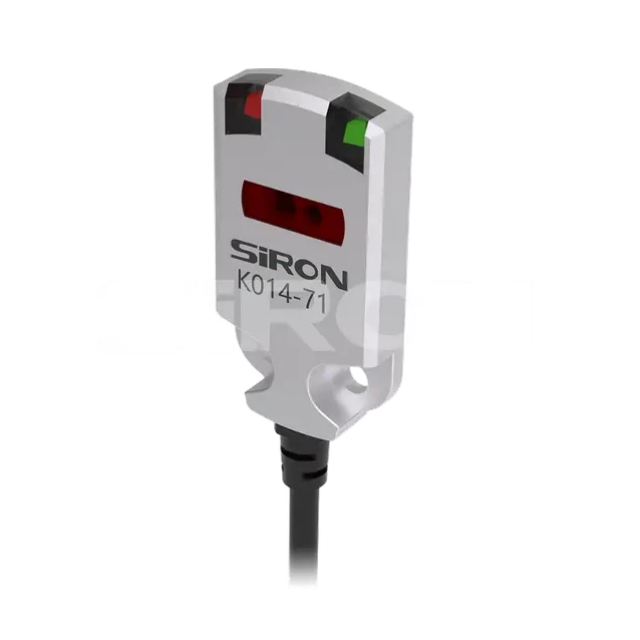
The advantages of photoelectric sensors are numerous, making them an essential part of industrial automation. Some of the key benefits include:
Accuracy and Reliability: Unlike traditional sensors that may wear out over time due to physical contact, photoelectric sensors are highly accurate in detecting objects, especially at high speeds. They can reliably detect small or fragile items that are difficult for traditional sensors to handle.
Enhanced Speed in Object Tracking: With the ability to quickly detect objects and communicate that information to automated systems, photoelectric sensors ensure that industrial processes remain efficient. This rapid feedback improves system throughput and prevents delays.
Durability and Maintenance-Free Operation: Since photoelectric sensors don’t require physical contact with objects, they are less prone to wear and tear, resulting in a longer operational life and lower maintenance costs. This makes them especially useful in environments where sensors are subjected to heavy wear, such as packaging lines or conveyor belts.
Versatility: These sensors are incredibly adaptable, able to detect a wide variety of materials, including transparent, reflective, and opaque objects. This makes them highly versatile for various industries, from automotive manufacturing to food packaging.
Non-contact Detection: The non-contact nature of photoelectric sensors is a major advantage as it reduces the risk of mechanical damage and minimizes the need for maintenance. This helps increase the lifespan of machinery and minimizes downtime, which is especially important in high-demand industrial environments.
When choosing a photoelectric sensor for a specific application, several factors need to be taken into account to ensure optimal performance. Here are some important aspects to consider:
Distance: Depending on the application, the required sensing distance may vary. Through-beam sensors are ideal for long-distance detection, while diffuse sensors are better suited for shorter ranges. Consider how far the sensor needs to detect objects for your particular setup.
Environmental Factors: The working environment plays a crucial role in sensor selection. If the sensor is being used in a dusty, humid, or high-temperature environment, it’s essential to select a sensor with a high Ingress Protection (IP) rating to ensure reliable performance. Many photoelectric sensors are available with IP ratings that protect them from water and dust, ensuring durability in harsh industrial conditions.
Object Type: The type of object to be detected is also a crucial factor. Some sensors are better suited for detecting reflective objects, while others are more effective for non-reflective or transparent objects. Retro-reflective sensors are often the best choice for shiny objects, while diffuse sensors work better with non-reflective materials.
Sensor Speed: If your application involves high-speed operations, it’s important to choose a sensor that can detect objects at the required speed without causing delays. Look for sensors that offer fast response times for more efficient system performance.
Table: Comparison of Photoelectric Sensor Types
Sensor Type | Detection Range | Application Area | Best Use Case |
Through-Beam | Long range (up to 50 meters) | High-speed sorting, large object detection | Detecting large, distant objects |
Retro-Reflective | Medium range (up to 10 meters) | Compact spaces, conveyor systems | Small to medium objects, space constraints |
Diffuse | Short range (up to 1 meter) | Close-range object detection | Short-range detection of irregular objects |
As technology continues to evolve, photoelectric sensors are becoming more sophisticated and capable of integrating into smart systems. Below are some of the trends shaping the future of these sensors:
AI and Machine Learning Integration: The integration of AI and machine learning algorithms into photoelectric sensors will enable predictive analytics, where sensors can forecast potential issues before they occur. This could reduce maintenance costs, minimize downtime, and optimize operations.
IoT-Enabled Photoelectric Sensors: The integration of photoelectric sensors with IoT technologies will enable real-time data monitoring and remote diagnostics. IoT-connected sensors will provide valuable insights into operational efficiency, performance trends, and potential issues, allowing for faster and more informed decision-making.
Enhanced Connectivity and Smart Automation: As industrial operations become increasingly connected, photoelectric sensors will play a crucial role in the automation of complex processes. With enhanced data collection capabilities and seamless integration with industrial automation systems, these sensors will enable more intelligent decision-making, leading to higher productivity and efficiency.
To conclude, photoelectric sensors have revolutionized the way industries approach object detection, offering numerous benefits including accuracy, reliability, and long-lasting performance. Their ability to operate without physical contact makes them ideal for high-speed and high-precision applications, reducing the need for maintenance and increasing system efficiency. As we look towards the future, the continued integration of photoelectric sensors with advanced technologies like AI and IoT will undoubtedly improve industrial automation, leading to smarter and more efficient manufacturing systems.
If you're interested in exploring high-quality photoelectric sensors, don’t hesitate to contact us for more details about our product offerings.
1. What is the difference between a through-beam and retro-reflective photoelectric sensor?
A through-beam sensor has separate emitter and receiver units, while a retro-reflective sensor uses a single unit with a reflector to detect objects.
2. Can photoelectric sensors detect transparent objects?
Yes, retro-reflective and diffuse photoelectric sensors can detect transparent objects by measuring the reflection of light.
3. How do photoelectric sensors improve safety in industrial environments?
Photoelectric sensors detect objects without physical contact, reducing the risk of accidents or equipment wear in high-speed operations.
4. Are photoelectric sensors suitable for harsh environments?
Yes, they are designed to function reliably in challenging environments, with models available that have high IP ratings to protect against dust and moisture.


