
Please Choose Your Language
close
Choose Your Site
Global
Social Media
Views: 225 Author: Site Editor Publish Time: 2025-10-23 Origin: Site


In modern industrial automation, bridging control logic and field-level devices (sensors, actuators, switches) often requires intermediary hardware whose job is to properly interface, isolate, and manage signal lines. Among the most fundamental of these components are I/O relay modules paired with a rack or backplane. Together, an IO relay module and rack form a robust, modular building block in control systems, enabling scalability, serviceability, and electrical isolation between subsystems. This article provides a deep dive into what an IO relay module and rack is, how it functions, how to choose one, and where it fits in a control architecture.
An I/O relay module is an electromechanical or solid-state module that interfaces between a control system (e.g. PLC, DCS, or a field controller) and one or more discrete output lines. Its primary role is to translate low-level logic signals into switched contacts (relays) that can drive field loads, while providing electrical isolation and modularity.
Signal translation and switching: A logic-level output (for example, 5 V or 24 V DC) from a controller triggers the relay coil or switching element, which in turn switches a higher-voltage or higher-current circuit (e.g. turning on a motor, solenoid, lighting, etc.).
Galvanic isolation: The relay module decouples the logic/control side from the load side, protecting sensitive electronics against spikes, noise, and ground potential differences.
Modularity and ease of maintenance: Because the relay is built as a plug-in module, faulty relays can be swapped without rewiring the entire field-side circuits.
Common bus and backplane compatibility: Many modules are designed to plug into a standardized rack with a bus or backplane, simplifying wiring and scaling.
Diagnostic feedback: Many relay modules include LEDs or status outputs so that technicians can see whether a given relay is energized or open/closed (common in industrial modules).
Relays may be mechanical (with physical contacts) or solid-state (e.g. SSR or MOSFET-based), depending on speed, life expectancy, and load type.
A DigiKey forum guide highlights that I/O relay modules are commonly used in industrial control and building automation, connecting sensors and control equipment to actuators, and enabling safe integration of devices operating at different potentials.
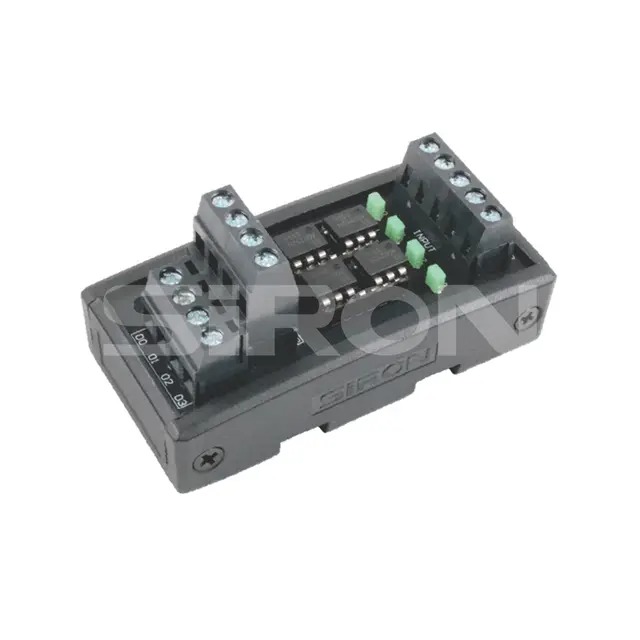
A relay module rack (or module backplane) is the mechanical and electrical infrastructure into which multiple I/O relay modules can plug. It typically serves the following purposes:
Electrical distribution: It routes power, common returns, and signal buses (e.g. +V, ground, control bus lines) to each module slot.
Signal aggregation: It provides terminal blocks or external connectors for the field wiring (sensors, actuators) and links them to the relay modules via the internal bus.
Physical support & standardization: It creates a common footprint and standardized spacing for modules, enabling easier handling, labeling, and replacement.
Scalability & expansion: The rack architecture facilitates adding or removing module capacity, and can support cascaded or expansion racks (central + remote racks) in larger installations.
Isolation continuity: In designs with galvanic separation, the rack helps maintain isolation boundaries and ensures safe distribution across modules.
According to product listings, I/O relay module racks are used primarily “to provide isolation when connecting devices powered from different sources and operating at different potentials to a common control system” in industrial settings.
Also, Schneider’s rack-based I/O architecture describes how a central rack plus expansion racks host I/O boards and interface buses, offering a high-density, modular I/O system.
To understand how an IO relay module and rack works in context, let’s break down its architecture and signal flow in a typical industrial control setup.
Controller Output Signal: A PLC or DCS sends a discrete control output (e.g. 24 V DC logic high) to a corresponding slot on the rack’s control bus.
Backplane Interface: The rack’s bus routing delivers that logic signal to the coil input of the specific relay module that occupies that slot.
Relay Activation: The relay module energizes a coil or triggers a solid-state switching element, closing (or opening) the relay contact.
Load Switching: The contact then connects/disconnects a higher-power circuit connected to terminals on the same module, driving the field device (e.g. solenoid, motor, heater).
Isolation and Protection: The relay isolates the low-voltage control side from the field-side power circuit; often, suppression diodes, snubbers, or protection networks are included to mitigate transients.
Feedback / Diagnostic: If equipped, the module may provide an LED or a diagnostic line back to the control system, indicating relay status or fault conditions.
The rack typically houses multiple module slots (4, 8, 16, 24, or more) arranged side by side.
The backplane includes common rails: a +V bus, ground bus, return bus, and possibly a common “logic return” or “common return.”
Field wiring is often terminated to terminal blocks mounted on the rack. The internal bus then connects the terminal blocks to each plugged-in module.
Some rack systems support hot-swap of modules (i.e. replacement without de-energizing the rack), but this feature must explicitly be supported by the vendor.
In large systems, a primary or “central rack” may be linked to one or more expansion racks via bus cables or network buses, permitting distributed I/O architectures.
Here is a simplified block diagram:
| Stage | Functional Element | Purpose |
|---|---|---|
| 1 | Controller / PLC Output | Provides control logic signal |
| 2 | Rack backplane bus | Distributes control power & logic signals to module slots |
| 3 | Relay module (coil + contact) | Switches field load based on logic input |
| 4 | Terminal block interface | Connects field wiring (load side) |
| 5 | Field device | Motor, valve, lamp etc. |
The modularity means if one relay fails, you can pop that single module out and replace it without disturbing adjacent modules or rewiring the field side.
To fully appreciate the value of an IO relay module and rack, it’s useful to understand the advantages and scenarios where they are especially beneficial.
Scalability & Flexibility
You can start with a minimal set of modules and incrementally expand by adding relay modules into open slots. If capacity is exceeded, you tie in expansion racks.
Maintainability & Serviceability
Since modules are plug-in, repairs or replacements are localized and quick. There's no need to rewire the entire system.
Electrical Isolation & Safety
The isolation built into relay modules protects control electronics from load-side spikes, EMI, and ground loops.
Standardization & Clean Wiring
A rack offers a standard, neat layout, with organized wiring and labeling. It reduces wiring errors, improves diagnostics, and eases engineering.
Cost Efficiency
Compared to designing separate relay islands or discrete wiring for every output, modular relay racks reduce engineering, installation, and maintenance costs.
Diagnostics & Monitoring
Many modules or racks support status LEDs, diagnostic feedback, or fault flags, increasing visibility and enabling predictive maintenance.
Industrial automation: Interface for PLC outputs driving motors, solenoids, relays, or other actuators.
Building automation: Control lighting, HVAC dampers, pumps, door locks, alarm systems.
Oil & gas / process control: Isolate and drive field devices distributed in hazardous or remote zones.
Test & measurement setups: Provide controlled switching and isolation for test instruments and load simulators.
Legacy system integration: In brownfield retrofits, relay modules allow modern logic controllers to drive older field devices without overhauling field wiring completely.
Choosing the proper IO relay module and rack system requires careful consideration of electrical, mechanical, and functional parameters. Below are major selection criteria and trade-offs.
| Parameter | Considerations | Best Practice |
|---|---|---|
| Number of channels | How many loads (relays) will you need now and in the future? | Choose a rack with spare slots or plan expansion racks |
| Relay type (mechanical vs solid-state) | Mechanical has physical contacts but limited life; SSR provides faster switching but may have leakage or voltage drop | For AC loads or inductive loads, mechanical often preferred; SSR for fast or silent switching |
| Voltage and current handling | Ensure module contact ratings (i.e. max current, max voltage) exceed field device demands | Use a safety margin (e.g. 20–30% above expected load) |
| Isolation & input requirements | Control side voltage (5V, 12V, 24V) and isolation barrier. Ensure modules isolate control from power side. | Match module input type (sinking, sourcing) to controller output |
| Module replacement capabilities | Does the system support hot-swapping or live replacement? | Only trust this feature if explicitly documented by vendor |
| Diagnostics and status feedback | LED indicators, fault lines, or status outputs make maintenance easier | Favor modules with visible status cues |
| Connector and terminal format | Terminal blocks, pluggable connectors, ribbon cable interfaces, or IDC connectors | Use connector types matching your field wiring plans |
| Rack bus architecture & expansion | Does the rack support cascading expansion racks or distributed I/O blocks? | Choose a rack ecosystem compatible with your planned growth |
| Environmental ratings | Operating temperature, vibration, corrosion resistance, EMI compliance | Ensure the system suits the field conditions (e.g. high temp, dirty environment) |
| Cost & vendor support | Price of modules, spare parts, availability, technical support | Prefer vendors with documented reliability and spare parts availability |
In a DigiKey selection guide, these same factors—voltage, current, input type, turn-on/off time, and features—are identified as essential for picking the right I/O relay modules.
While IO relay modules + racks are a classic and proven approach, it’s worthwhile to compare them with alternatives and understand the contexts where each approach fits best.
Direct PLC outputs (no relay module)
Some PLCs offer integrated relay outputs or transistor outputs.
Pros: Minimal footprint; fewer components
Cons: Limited current/voltage capability; less isolation; poor modularity
This is suitable for small, low-power systems.
Discrete relay islands / terminal relays
Individual relays wired in a “relay island” without a central backplane.
Pros: Simple; no rack infrastructure needed
Cons: Harder to expand; more wiring; modular replacement is messy
Smart output modules / solid-state outputs (digital I/O modules)
Modules that embed switching logic directly in a DIO module (e.g. a digital output module in a PLC rack)
Pros: Very compact; integrated diagnostics; full bus integration
Cons: May have more limited switching capacity; less isolation in harsh environments
Fieldbus / remote I/O modules
A remote I/O node communicates via a fieldbus (Modbus, Profibus, Ethernet/IP) and provides switching outputs.
Pros: Minimal wiring distance; distributed architecture
Cons: Higher cost per module; complexity of networking; latency or fault tolerance considerations
| Approach | Best Use | Limitation |
|---|---|---|
| PLC direct outputs | Small systems with light loads | Limited switching capacity and isolation |
| Relay module + rack | Medium to large systems with modular growth | Requires rack infrastructure and upfront planning |
| Discrete relay islands | Simpler systems with few channels | Harder to expand and maintain |
| Smart DIO modules | Compact systems with integrated control | May not handle heavy loads or isolation requirements |
| Remote I/O modules | Geographically distributed field devices | Cost, network complexity, redundancy concerns |
Generally, IO relay module + rack shines when you need moderate to high channel counts, modular serviceability, robust isolation, and future expansion — while maintaining clarity and manageability in wiring.
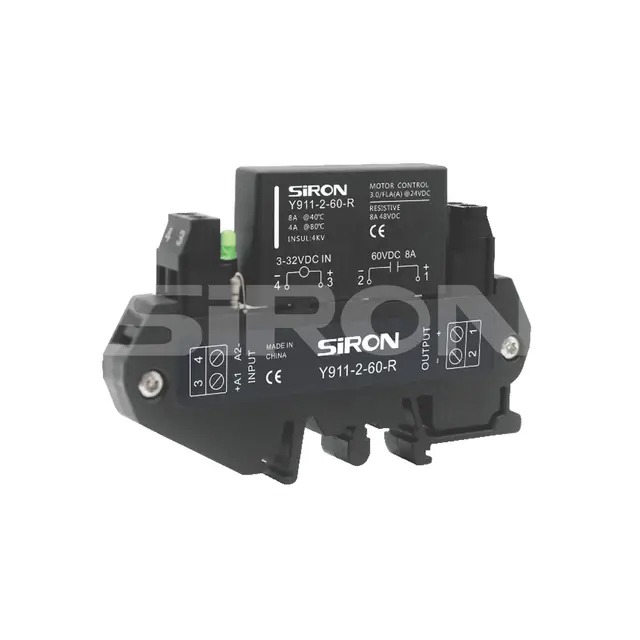
To ensure that your deployment of IO relay module and rack is reliable, maintainable, and safe, consider the following best practices.
Label everything rigorously: Both rack slots and terminal blocks should have clear, consistent numbering.
Separate high-power and logic wiring: Use shielded or separate conduit routing to reduce interference.
Maintain proper spacing and ventilation: Some relay modules dissipate heat; allow airflow or use forced cooling if necessary.
Grounding discipline: Ensure the control side and field side have proper grounding and bonding per electrical codes.
Use proper wire gauge: Especially on load side, ensure wire gauge supports full current without significant voltage drop.
Keep spare modules on hand: A plugged-in spare can reduce downtime.
Test modules offline periodically: Use a test bench or diagnostics mode to verify relay integrity.
Document module-to-field mapping: Keep accurate records (e.g. which module controls which device) for quicker troubleshooting.
Check for wear, contact bounce, or corrosion: Especially in mechanical relays, periodic inspection or replacement is prudent.
Include transient suppression: Diodes, RC snubbers, or MOVs help suppress induced voltage spikes, especially for inductive loads.
Fuse or circuit protect: Provide fusing on load circuits to protect modules and downstream devices.
Fault isolation: In deeper architectures, design racks or modules so that a fault in one slot can be disabled or isolated without affecting the rest.
Use modules rated for hot-swap only if explicitly supported: Swapping live modules without support may damage the backplane or module.
Use modules with LEDs or status outputs: This gives immediate visual feedback on module state.
Connect diagnostic lines back to controller: If modules support fault or status bits, feed them into the logic for alarm handling.
Implement health-check routines: In software, periodically command relays and verify state consistency.
Log relay operations: For preventive maintenance, track counts, durations, and switching anomalies.
Suppose you are designing a control system for a packaging line with 40 solenoid valves (24 V DC, 2 A each). You want a modular and maintainable solution.
Rack choice: You select a 24-slot relay module rack with expansion capability.
Module selection: You choose relay modules rated 24 V DC, 5 A mechanical relays, with LED indicators and diagnostic outputs.
Spare slots: You leave 4 empty slots for future expansion or spare modules.
Wiring layout: Field wires from the valves route to terminal blocks on the rack, backplane bus handles control signals.
Protection: Each valve circuit has a fuse and a suppression diode across the coil.
Diagnostics: Each module’s LED shows status; diagnostic bits feed into the PLC for fault detection.
Maintenance readiness: Spare modules are mounted nearby for quick replacement; labeling ensures clear identification.
If one module fails, you pull it out and insert a fresh one without rewiring the field circuits — minimizing downtime.
This kind of architecture is widely used for industrial automation, building control, and retrofit projects, leveraging the flexibility and robustness of the IO relay module + rack paradigm.
An IO relay module and rack is a structural and functional pattern in industrial control, providing an effective interface layer between control logic and field devices. The module handles the switching and isolation, while the rack provides structured connectivity, scalability, and maintainability. Choosing the right module and rack system — with appropriate isolation, diagnostics, expansion capacity, and environmental resilience — enables control architects to build systems that are modular, serviceable, and future-ready.
Q1: Can I mix relay modules from different vendors in one rack?
It depends. The modules must match the mechanical and electrical bus standard of the rack (pin-out, voltage rails, isolation scheme). Some racks are vendor-locked; others follow open standards like DIN backplane. Mixing is possible only if pinouts, ratings, and physical fit align.
Q2: Are IO relay modules and racks suitable for analog signals?
Not directly. Relay modules are typically for discrete (on/off) switching. For analog signals, you’d use separate analog I/O modules or signal conditioning modules. However, some racks may host both relay modules and analog I/O modules (if the architecture supports mixed I/O boards).
Q3: What is the life expectancy of mechanical relay modules?
It depends on load type, switching frequency, and contact material. Under light resistive loads, tens to hundreds of millions of operations may be expected; inductive or heavy loads reduce life. Solid-state relay modules offer longer life but come with trade-offs (leakage, voltage drop).
Q4: Is hot-swapping (live replacement) of relay modules always safe?
No. Only racks and modules explicitly rated and designed for hot-swap should be exchanged under power. Without proper support, swapping live modules risks backplane damage or transient faults.
Q5: Can I use an IO relay module and rack in hazardous or explosion-proof zones?
Yes — but only if both the rack and modules are certified for such environments (e.g. ATEX, IECEx). You must ensure proper flameproof housings, barrier modules, and intrusion protection as required by safety standards.
Q6: How many modules can I practically chain via expansion racks?
That depends on your chosen rack bus architecture and communication limits (voltage drop, bus length, timing). Some manufacturers offer cascades of two or more expansion racks linked to a central rack. Be mindful of bus capacity, signal integrity, and power distribution when scaling.


