
Please Choose Your Language
close
Choose Your Site
Global
Social Media
Views: 0 Author: Site Editor Publish Time: 2026-10-20 Origin: Site


Fundamental Difference: A standard junction box primarily protects spliced wires twisted together via wire nuts. A terminal box utilizes structured, fixed blocks to secure, organize, and route individual conductors systematically.
The Hybrid Solution: A hybrid enclosure combines the rugged exterior environmental protection of a traditional box with the highly organized connections of internal terminal strips. This makes it the optimal choice for complex industrial applications.
Maintenance and Troubleshooting: Structured enclosures drastically reduce operational downtime during routine maintenance. Because each wire is individually secured and sequentially labeled, engineers avoid the tangled splices commonly found in standard enclosures.
Application Specificity: Standard empty boxes remain common in residential power distribution. Conversely, structured enclosures are absolutely essential for complex industrial automation, NPN or PNP sensor wiring, and programmable logic control systems.
Safety and Compliance: Selecting the appropriate enclosure ensures strict compliance with National Electrical Code standards. It mitigates dangerous arc fault risks and enhances the overall longevity of the electrical infrastructure.
In the trenches of industrial wiring and control panel design, people often mix up the terms terminal box and junction box. Treating them as the same piece of hardware leads to costly wiring errors. It causes severe maintenance headaches and triggers frustrating code compliance issues. Both enclosures protect electrical connections from harsh factory elements. However, their internal structures, specific use cases, and troubleshooting capabilities differ completely.
To engineer a resilient electrical system, frontline professionals must first distinguish between the primary functions of basic hardware. Both act as physical barriers against environmental hazards. Yet, their internal mechanics dictate entirely different applications.
Think of a standard junction box as a protective shell. Manufacturers stamp these from steel, cast them from aluminum, or mold them from PVC. Its primary function is serving as a meeting point where multiple electrical wires splice together to distribute facility power.
Mechanically speaking, technicians strip the conductors, twist them together, and secure them using floating connectors like wire nuts or crimp caps. The box itself lacks built-in connection points. It is merely an empty protective cavity. Its main job is concealing live connections, shielding them from moisture, and physically containing sparks during a catastrophic short circuit.
By stark contrast, a terminal box is engineered from the ground up to house rigid blocks. Instead of leaving an empty shell for free-floating splices, this hardware features internal mounting mechanisms. These standoffs or DIN rails lock the connection points rigidly in place.
The wiring protocol changes entirely here. Conductors slide into designated, fixed slots. Technicians clamp them down using screw terminals, spring-clamp technology, or modern push-in fittings. Absolutely no wire twisting is involved. This layout provides a highly organized, visually intuitive point for circuit testing and complex signal routing.
Understanding structural differences is only the first step. How do these physical variations impact system performance, thermal dynamics, and long-term maintenance costs? Let us look at the core comparative data.
Feature | Standard Junction Box | Terminal Box |
|---|---|---|
Internal Structure | Empty cavity for floating splices | Fixed, rigid terminal blocks |
Connection Method | Twisted wires, wire nuts, crimps | Screw clamps, spring tension, push-in |
Heat Dissipation | Poor due to bundled wire clusters | Excellent due to linear, spaced layout |
Troubleshooting Speed | Slow. Requires untwisting live wires | Fast. Direct probe access on test ports |
Vibration Resistance | Low. Wire nuts can vibrate loose | High. Dynamic clamping force secures wires |
Space management inside an enclosure directly impacts thermal dissipation. Standard enclosures quickly devolve into cluttered nests if too many conductors splice within a confined volume. Bundled wires trap localized heat generated by electrical resistance. This trapped heat drastically increases the risk of thermal degradation to the wire insulation over time.
Structured terminal enclosures resolve this critical issue through physical isolation. Keeping wires neatly separated and sequentially aligned optimizes the internal volume. This linear layout allows passive airflow between connection points. Consequently, it significantly lowers the risk of thermal-induced failure.
In heavy industrial environments, equipment downtime translates directly to massive revenue loss. Testing a faulty circuit in a standard junction setup is frustrating. A technician must shut off the main power, pull the bundled wires out, remove the wire nuts, untwist the splices, and then test individual conductors. You simply hope a loose wire does not short out during the process.
Conversely, troubleshooting within a structured enclosure takes seconds. Engineers apply a multimeter probe directly to the exposed metal testing ports on the terminal block. You never disconnect a single wire. This direct access allows for rapid continuity checks and signal verification, cutting maintenance windows down from hours to mere minutes.
High-torque water pumps and manufacturing conveyors generate continuous, punishing mechanical vibration. Twisted wires secured by plastic wire nuts are highly susceptible to fretting corrosion. Micro-movements weaken the connection, leading to increased electrical resistance, overheating, and potential arcing.
Modern terminal blocks combat this mechanical stress actively. Spring-clamp technologies apply a constant dynamic pressure to the copper conductor. This clamping force actively compensates for thermal expansion and high-frequency vibrations. It ensures a stable, low-resistance connection over the decades-long lifespan of the equipment.
Looking at recent shifts in industrial automation, there is a massive push toward decentralized control architectures. Facilities are rapidly moving away from massive, centralized wiring cabinets. Instead, the industry trend heavily favors modular, machine-mounted enclosures. This shift minimizes long cable runs and accelerates diagnostic speeds right on the factory floor. Smart diagnostics and Industrial Internet of Things integration demand cleaner, more reliable signal aggregation at the sensor level. This evolution makes traditional spliced boxes obsolete for modern data-driven networks.
As electrical systems evolve from simple power distribution to intricate automation networks, engineers require hardware that bridges the gap. We need rugged exterior protection combined with precise internal organization.
A specialized hybrid enclosure seamlessly integrates heavy-duty environmental shielding with the internal precision of pre-mounted terminal blocks. Instead of purchasing an empty box and spending hours retrofitting it with custom-cut rails, engineers specify pre-configured enclosures. For instance, utilizing a compact Terminal Block Junction Box eliminates manual assembly and ensures factory-grade reliability right out of the package.
Safety in electrical engineering relies heavily on predictability. A hybrid enclosure introduces strict predictability into complex wiring systems. It provides a dedicated, mechanically torqued connection point for every single conductor. This prevents the loose connections that inevitably lead to high-resistance heating. Furthermore, keeping live conductors physically isolated via dielectric plastic barriers virtually eliminates the risk of phase-to-phase arc faults.
While empty boxes work for basic office lighting, specific engineering applications demand advanced structured enclosures.
Modern manufacturing relies heavily on Programmable Logic Controllers receiving constant data streams from proximity and pressure sensors. Routing multiple sensor cables back to a central control panel requires meticulous organization. A properly specified hybrid terminal enclosure acts as a decentralized aggregation node. It collects local sensor signals and routes them cleanly via a multi-core trunk cable back to the main controller.
Electric motors draw significant inrush currents during startup and generate intense vibrations. Wiring a three-phase motor using standard wire nuts is widely discouraged due to catastrophic failure risks. Utilizing a structured enclosure equipped with high-current terminal blocks ensures power phases remain securely fastened, regardless of the operational vibration.
Solar photovoltaic arrays and wind turbine control nodes operate in unforgiving environments. These systems require weatherproof enclosures handling high DC voltages alongside extreme temperature fluctuations. A UV-resistant hybrid enclosure allows technicians to parallel solar panels securely. It ensures that morning dew, heavy rain, and blowing dust cannot compromise the sensitive electrical contacts inside.
The physical material dictates suitability for specific operating environments. Engineers must specify materials based on chemical exposure, mechanical impact risks, and electromagnetic interference.
Polycarbonate enclosures resist corrosive chemicals and are naturally non-conductive. This eliminates the need for complex enclosure grounding. They are transparent to radio frequencies, making them ideal for wireless sensor networks. Metal enclosures offer superior mechanical impact resistance. Stainless steel remains absolutely mandatory in food processing facilities enduring high-pressure chemical washdowns daily.
Protecting sensitive blocks from water and dust ingress is non-negotiable for preventing short circuits.
IP54: Protects against limited dust ingress and splashing water. Suitable for clean indoor industrial areas.
IP65: Fully dust-tight and protected against low-pressure water jets. Ideal for factory floors with standard wet-cleaning protocols.
IP67: Fully dust-tight and withstands temporary total immersion in water. Required for extreme outdoor environments or flood-prone pump stations.
Adhering to electrical codes is the absolute foundation of safe engineering practice. Failing to comply results in failed inspections, denied insurance claims, and severe safety hazards.
One critical compliance metric is the box fill calculation. This rule dictates the minimum allowable internal volume based on American Wire Gauge size and conductor count. The goal is preventing overcrowding, which damages wire insulation and restricts heat dissipation. Hybrid terminal enclosures require careful mathematical sizing because the rigid components consume internal volume.
Codes strictly mandate that all connection boxes remain fully accessible without removing permanent building structures. You cannot bury them behind drywall or seal them under poured concrete. Future technicians must safely access internal connections for testing or maintenance without resorting to destructive demolition.
Transitioning from basic twisted splices to a structured system requires careful component selection. Let us look at a concrete evaluation standard for frontline engineers.
Determine the exact number of poles required for the current circuit. Always factor in a thirty percent expansion margin for future network scaling. Ensure the blocks are rated for the correct wire gauge and maximum anticipated voltage. Undersizing these blocks leads to excessive resistance and eventual catastrophic failure.
Integrating field sensors requires specific hardware logic. Industrial sensors generally output either a sinking ground signal or a sourcing positive voltage signal. Selecting an enclosure featuring integrated blocks specifically bridged for NPN or PNP logic prevents costly wiring errors and protects expensive input cards from short circuits.
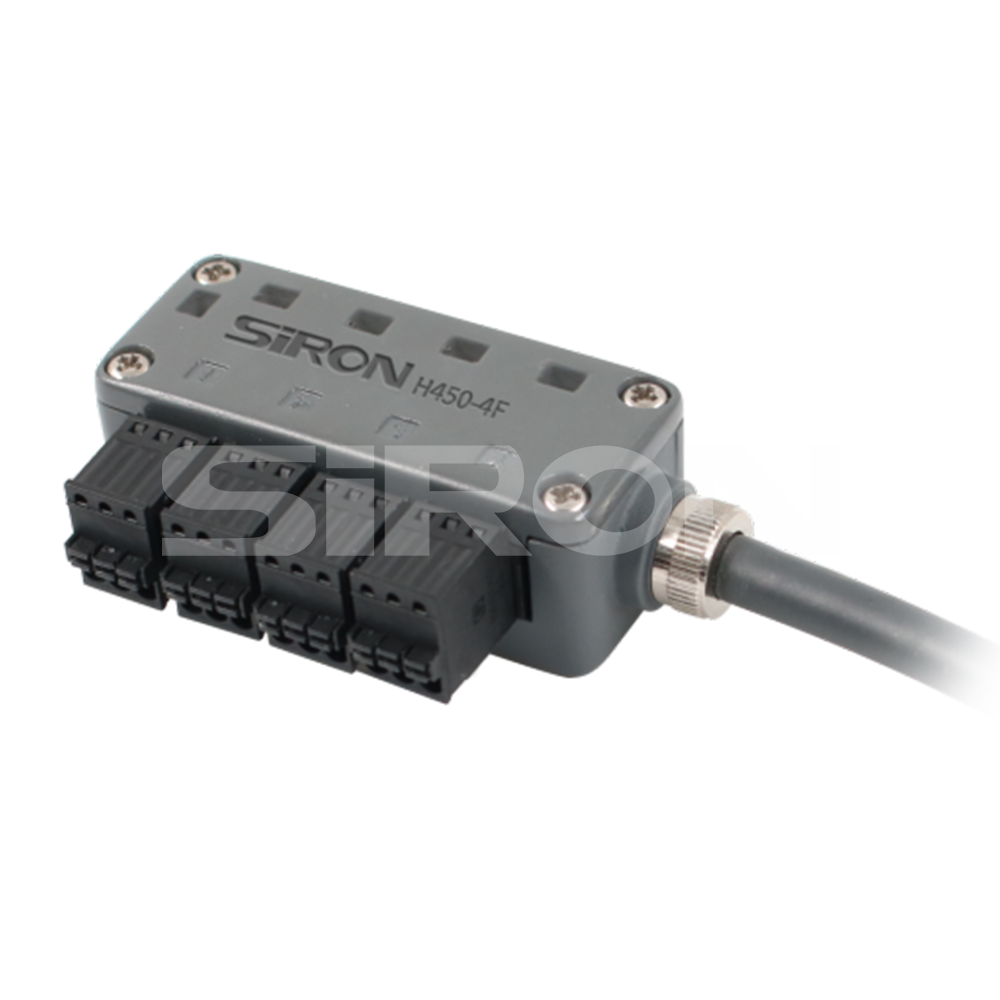
When factory floor space is at an absolute premium, engineers must look toward specialized compact solutions. The SiRON H450 Series MINI Terminal Block Junction Box serves as a prime example of high-efficiency industrial design. It is engineered specifically to support seamless NPN and PNP sensor integration. It features clear visual LED status indicators right at the sensor level. Its space-saving MINI design mounts directly onto tight machine frames, eliminating the need for bulky custom rail assemblies.
The electrical industry is filled with overlapping terminology. To ensure accurate procurement, engineers must distinguish between active connection enclosures and passive cable management.
Pull boxes are installed strictly to assist electricians in pulling long wire runs through rigid conduit systems. They contain continuous runs of wire. Absolutely no splices or terminal blocks are allowed inside. Junction and terminal enclosures exist specifically to facilitate and house active electrical connections.
Inline floating connectors are useful for temporary setups. However, for permanent heavy-duty installations, a rigid structured enclosure is vastly superior. It isolates mechanical cable strain from the delicate electrical contact. This ensures a highly maintainable and durable installation over decades of continuous use.
Selecting the right enclosure ensures your electrical systems remain safe, compliant, and continuously operational. Standard empty boxes work fine for basic residential needs. Modern industrial automation demands the precision and reliability of structured hardware.
Upgrading your infrastructure to utilize a Terminal Block Junction Box prevents dangerous loose connections and radically simplifies troubleshooting. If you are looking to optimize your control panels, streamline sensor wiring, or eliminate maintenance bottlenecks, explore the professional-grade solutions available at Siron Group. Choose the exact configuration that matches your industrial automation requirements today and safeguard your operational uptime.
Yes. By permanently mounting a terminal block inside a standard junction box, you effectively create a hybrid terminal enclosure. However, engineers must recalculate the internal volume. You must ensure the enclosure is physically large enough to meet code fill requirements, properly accounting for the geometric space the terminal blocks consume.
In industrial, high-vibration, and heavy-machinery environments, they are significantly safer. Terminal blocks utilize a secure mechanical clamping force that is highly resistant to vibrating loose over time. Twisted wire nuts can slowly untwist under constant machine vibration. This drastically increases the risk of electrical arcing and potential electrical fires.
A switch box is specifically engineered to house user-operated electrical devices, such as light switches or wall receptacles. They are usually mounted flush with drywall. A junction box is designed solely to protect wire-to-wire connections. It does not house user-operated devices and is often mounted on the surface of walls or hidden within accessible ceiling spaces.
This specification depends entirely on your programmable logic controller and the specific sensor logic in your facility. PNP sensors output a positive voltage signal, while NPN sensors output a ground signal. You must audit your automation network and select an enclosure explicitly configured to match the exact logic of your control system.
Generally, yes. Because terminal blocks physically separate each wire and lay out every connection side-by-side in a linear fashion, they naturally require a larger physical footprint. A standard box where wires are simply twisted together takes up less geometric space. Therefore, terminal enclosures usually require a slightly larger size to remain code-compliant and allow adequate heat dissipation.
Yes, provided it carries the correct Ingress Protection rating. Enclosures rated IP65 or IP67 feature specialized rubber gaskets that completely seal the internal terminal blocks from rain, moisture, and dust. Always verify the environmental rating before outdoor deployment.
Wiring a PNP sensor requires matching the positive sourcing signal to the correct input terminal. Modern specialized enclosures often feature dedicated, pre-bridged slots with LED indicators specifically designed for PNP logic. You simply strip the sensor wire, insert it into the designated PNP slot, and secure the mechanical clamp.


