
Please Choose Your Language
close
Choose Your Site
Global
Social Media
Views: 0 Author: Site Editor Publish Time: 2026-10-20 Origin: Site


Is your network failing at its most critical junction? Weak connections cause signal loss. They inevitably lead to costly downtime. Subpar wiring can ruin an otherwise perfect industrial control setup. In modern telecommunications and industrial automation, network integrity is truly only as strong as its weakest physical link.
In this comprehensive guide, you will learn how specialized Head Cable solutions solve these exact vulnerabilities. Upgrading to precision-engineered assemblies allows facility managers to eliminate bottlenecks. You can drastically reduce maintenance overhead and ensure seamless data transmission across your entire facility.
Unmatched Quality: SIRON assemblies utilize premium tested materials. They minimize signal degradation and maximize physical durability in punishing environments.
Versatile Solutions: Projects often demand single-headed configurations for custom splicing. Others require double-headed options for immediate plug-and-play deployment. Specific operational setups are easily accommodated.
Cost-Effective Reliability: Investing in high-grade wiring drastically reduces long-term maintenance costs. It lowers the total cost of ownership and prevents catastrophic operational downtime.
Customization: Tailored manufacturing processes ensure stringent industry requirements are met. Unique pin configurations and specialized electromagnetic interference shielding are executed with absolute precision.
In data processing and industrial automation, the head end serves as the master facility. Think of it as the central nervous system for your entire operational infrastructure. Signals are received, processed, and distributed right here. All downstream data relies entirely on the integrity of this central hub. Environmental stressors constantly threaten this stability. High-frequency vibration, extreme temperature fluctuations, and electromagnetic interference constantly degrade signal paths. Consequently, selecting the right physical components is a critical engineering decision. It is never an afterthought.
A premium head cable acts as the primary physical bridge. It facilitates the transmission of power and control signals into the head end system. Historically, the connector itself is the most vulnerable segment of any wiring assembly. It represents the exact point where flexible internal conductors interface with rigid external pins. This specific transition makes it highly susceptible to mechanical stress and oxidation.
Picture a bustling data center. A single loose pin can bring down an entire server rack. Precision engineering ensures the transition from flexible wire to rigid connector maintains consistent impedance. If this component fails, the entire network experiences severe latency or total system failure. I have seen entire production lines halt simply because a generic connector could not handle repetitive mechanical vibration.
The Industrial Internet of Things and edge computing are rapidly expanding across global markets. Recent industry analyses highlight a growing zero-tolerance policy for latency and signal degradation. Modern facilities are actively moving away from legacy unshielded wiring. They are transitioning to advanced shielded assemblies capable of handling high-frequency data loads without packet loss.
Specifically, the demand for high-density routing in confined spaces has skyrocketed. Engineers now require cables that deliver maximum bandwidth while occupying minimal physical space. Operational efficiency in enterprise environments is now closely tied to physical infrastructure reliability. Upgrading your head end setup is no longer just an option. It is a fundamental requirement for staying competitive in automated manufacturing and high-speed telecommunications.
Selecting a vendor for critical infrastructure requires a deep dive into production methodology. SIRON operates under stringent quality control protocols. The production lifecycle involves multiple testing phases to eliminate defects early. These phases include automated continuity testing to verify pin-to-pin accuracy. We also perform high-potential testing to ensure insulation integrity under extreme voltage stress. Mechanical pull-force testing measures strain relief durability. Every batch maintains a predictable and highly reliable performance baseline.
The physical lifespan of any wiring assembly is directly proportional to its raw materials. SIRON utilizes high-conductivity oxygen-free copper cores. This drastically reduces electrical resistance and prevents internal oxidation. Inside the connector heads, contacts feature heavy corrosion-resistant plating. This treatment is essential for maintaining a stable electrical connection in chemically harsh industrial environments.
Furthermore, the outer sheathing is extruded from durable polymers like polyvinyl chloride or thermoplastic elastomer. These specialized materials offer superior resistance to abrasion and industrial oils. The delicate internal wires remain protected under continuous mechanical stress.
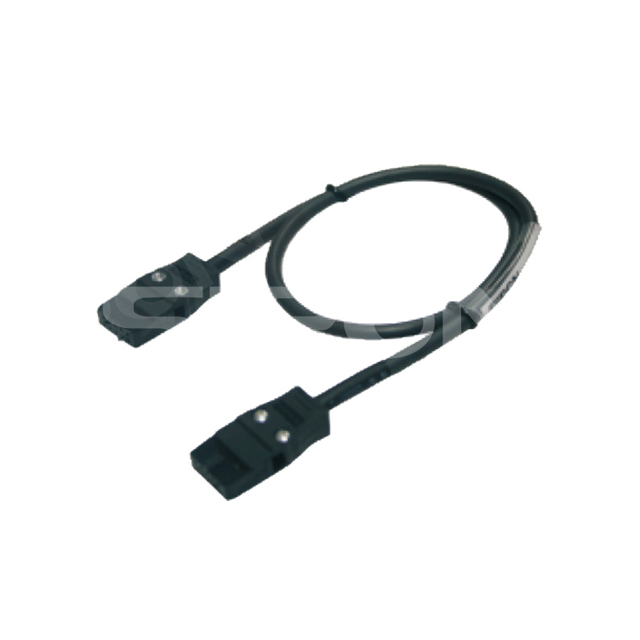
System engineers often require custom setups. Single-headed cables provide unparalleled flexibility for these applications. These assemblies feature a precision-molded connector on one end. The opposite end remains bare or pre-stripped. This configuration is ideal for direct-to-board soldering or custom splicing into existing terminal blocks. It is also perfect for routing through tight conduits where a secondary connector would create an obstruction. Technicians can make exact length modifications on-site. This minimizes hazardous cable slack and improves control panel organization.
Deployment speed and system standardization are often primary objectives. Double-headed cables offer a distinct advantage here. Terminated with robust connectors on both ends, these assemblies provide immediate plug-and-play efficiency. This eliminates the tedious need for manual wire stripping during installation. Labor costs drop significantly. The risk of human error in pin assignment is mitigated. Double-headed configurations prove highly valuable in modular setups and dense server racks.
The SIRON X210 series represents a highly engineered solution designed for complex head end applications. By integrating the SiRON X210 single and double headed cable into your infrastructure, you immediately benefit from optimized strain relief. Secure locking mechanisms prevent accidental disconnections. System integrators select the X210 due to its remarkably low contact resistance and excellent flexibility. It easily handles unique pin configurations and specialized electromagnetic interference shielding requirements.
Downtime remains the most expensive metric for any facility manager. Standard off-the-shelf wiring typically utilizes inferior jacket materials. They lack adequate strain relief at the connector junction. Continuous micro-movements and thermal expansion cause internal copper strands to fray. This structural degradation leads to intermittent connectivity issues. Diagnosing these faults requires hours of frustrating troubleshooting.
SIRON addresses this vulnerability through precision engineering at the connector joint. Advanced injection overmolding techniques distribute the mechanical load evenly across the robust cable jacket. Force is not concentrated on fragile internal solder points. This proactive design extends the mean time between failures. Your data centers and automated machinery operate continuously.
Electrical characteristics determine the accuracy and speed of data transmission. Heavy machinery and dense server racks constantly generate electromagnetic and radio frequency interference. Inferior cables act as antennas. They absorb interference and introduce chaotic noise into the signal path.
In contrast, SIRON assemblies incorporate multi-layered shielding. Dense aluminum foil wrapping combines with tinned copper braiding. This dual-layer defense effectively blocks external interference while preventing internal signal crosstalk. The result is a pristine signal path from the head end to the terminal device.
For procurement managers, justifying premium infrastructure components requires objective analysis. Generic cables offer a lower initial purchase price. However, they frequently introduce hidden costs associated with premature failure.
The most distinct difference lies in the connector head construction. Generic cables utilize basic snap-fit plastic housings. Under tension, internal wires bear the brunt of the force. SIRON employs advanced overmolding technology. A durable polymer is injected directly over the soldered connections. The cable jacket, internal wires, and connector body fuse into a single solid unit. This completely seals delicate contact points against moisture and dust ingress.
Organizations must evaluate the total cost of ownership. When generic cables fail, the replacement part cost is negligible. The real expense is the labor required to diagnose the fault and install the new wire. A halted manufacturing line escalates financial losses to thousands of dollars per hour. Investing in a verified high-grade head cable virtually eliminates these replacement cycles.
Feature / Metric | SIRON X210 Series | Standard Generic Alternatives |
|---|---|---|
Connector Molding | Integrated overmolding for maximum strain relief | Basic snap-fit or minimal plastic housing |
Conductor Material | High-purity oxygen-free copper | Copper-clad aluminum or low-grade copper |
Shielding Effectiveness | Dual-layer foil and braid for high interference environments | Single-layer or unshielded |
Quality Testing | Automated continuity and high-potential pull testing | Batch sampling or no specialized testing |
Total Cost of Ownership | Lower long-term cost due to extended lifespan | High long-term cost due to frequent replacements |
Before requesting a custom build, engineers should compile a precise technical checklist. Abstract specifications lead to poor integration. Follow this concrete evaluation standard to ensure absolute compatibility.
Determine Termination Type: Decide if your setup requires a single-headed cable for custom splicing or a double-headed cable for plug-and-play connectivity.
Identify Conductor Count and Pitch: Count the exact number of internal conductors required. Measure the spacing pitch between the pins accurately.
Specify Wire Gauge: Select the correct American Wire Gauge based on your current electrical load and voltage requirements.
Evaluate Environmental Hazards: Assess your operational environment. Decide if specialized dual-layer shielding or moisture-resistant jackets are necessary.
Streamlining the procurement process is your next step. Direct consultation with the manufacturer ensures all technical parameters are flawlessly met. Buyers looking to upgrade their infrastructure should explore the technical data sheets. Engaging directly with our engineering team guarantees optimized pricing and exact specification matching without supply chain delays.
Your head end system is the beating heart of your operational infrastructure. It requires highly reliable connections to function at peak capacity. Subpar wiring inevitably leads to costly operational downtime and data corruption. Choosing a dedicated precision manufacturer solves these infrastructure problems directly at the source.
SIRON engineered assemblies provide consistent power delivery and accurate data transmission. We utilize premium materials that ensure long-term safety and overall system performance. Do not let a weak connection compromise your network. Upgrade your facility infrastructure with our proven solutions today. Visit SIRON to explore our full product lineup and request a custom quote tailored to your exact specifications.
A single-headed cable features a molded connector on one end while the opposite end is left bare. This configuration is utilized when a technician needs to hardwire or splice the cable directly into a proprietary control board. A double-headed cable features connectors on both ends. It is designed for immediate plug-and-play connectivity between two compatible ports, drastically reducing installation time.
Yes. SIRON specializes in custom cable manufacturing. Buyers can specify exact parameters including overall cable length, wire gauge, internal pin configurations, and multi-layer shielding types. We also offer specialized outer jacket materials such as polyurethane for oil resistance or low smoke zero halogen for fire safety. This ensures the final product meets precise mechanical requirements.
The head end is the central aggregation point where data or power enters a control system. The cable serves as the primary physical bridge at this critical junction. If this cable suffers from high electrical resistance or mechanical failure, it creates a severe bottleneck. This compromises the performance and reliability of the entire downstream network.
Absolutely. SIRON cables are engineered for high durability in punishing environments. They utilize advanced injection overmolding at the connector joints to provide exceptional strain relief. Depending on the specified application, the outer sheathing is carefully selected to resist environmental stressors like moisture ingress, chemical exposure, and continuous mechanical vibration.
To determine compatibility, verify the specific electrical and physical requirements of your equipment. Check your hardware manuals for required pin counts, voltage ratings, current capacities, and connector pitch dimensions. If you are unsure whether the standard configuration meets your needs, contact our engineering support team to review your schematics.
Electromagnetic interference introduces electrical noise into unshielded wiring. This noise corrupts data packets and causes signal latency. In severe cases, it can trigger false signals in automated machinery. Utilizing cables with dual-layer foil and braided copper shielding prevents this interference from penetrating the core conductors.
The lifespan depends heavily on environmental factors and construction quality. Standard generic cables may fail within a few months under heavy vibration or continuous flexing. Precision-engineered assemblies utilizing polyurethane jackets and overmolded connectors can last several years. They easily withstand millions of bending cycles without degrading.


