
Please Choose Your Language
close
Choose Your Site
Global
Social Media
Views: 0 Author: Site Editor Publish Time: 2026-01-26 Origin: Site


In various industrial applications, industrial sensors play a pivotal role in achieving precise distance measurements. These sensors are widely trusted for their reliability, offering a non-contact method of measuring and monitoring distances, which makes them indispensable in industries requiring accurate and efficient monitoring systems. Magnetic switches are highly beneficial in environments where other sensor types might fail due to physical wear, making them an ideal solution for continuous monitoring. In this article, we will delve into how these switches work, their applications in industrial settings, and how they can improve overall measurement accuracy. SiRON Electrical offers high-quality magnetic switches designed to meet the toughest demands in industrial automation.
Magnetic switches are sensors that detect the presence or absence of a magnetic field. They are primarily used for detecting the position or movement of objects, making them an excellent choice for non-contact applications.
The basic principle of operation revolves around magnetic field detection. A magnetic switch contains a reed switch or a Hall-effect sensor, both of which react to changes in the magnetic field. When a magnet comes near the sensor, it triggers a response, such as closing or opening a circuit.
Reed Switches: A reed switch consists of two ferromagnetic reeds in a glass tube that are normally open. When a magnetic field is applied, the reeds are attracted to each other, causing the circuit to close. This type of magnetic switch is highly reliable and can operate in challenging environments.
Hall-Effect Sensors: These sensors use the Hall effect to detect magnetic fields. When the magnetic field passes through the semiconductor material, it generates a voltage, which is then processed to produce a switch output. Hall-effect sensors are more sensitive and are suitable for applications requiring precise detection.
Each type of magnetic switch serves different needs, depending on factors such as sensitivity, application type, and environmental conditions.
Magnetic switches are widely used across various industries for applications that require precise measurement of distances, positions, or levels. Here are some key use cases:
Liquid Level Detection: One of the most common uses of magnetic switches is in liquid level detection systems. By attaching a magnet to the floating element in a tank, the magnetic switch can accurately determine the liquid level. This non-contact sensing technology ensures reliability and long-term performance in demanding environments such as chemical plants, water treatment facilities, and oil refineries.
Measurement of Distance in Automated Systems: Magnetic switches are also used for measuring distance or position in automated systems. For example, they can monitor the position of moving parts on a conveyor belt or the distance between robotic arms in assembly lines. This helps ensure that the machinery operates with high precision, optimizing production rates and reducing errors.
Position Sensing: In industrial machinery, magnetic switches are used for detecting the position of mechanical components. For instance, they can detect whether a door is open or closed, or whether a part is in the correct position in an automated assembly line. Their reliability and accuracy make them indispensable in maintaining operational efficiency.
Proximity Detection: In addition to measuring distance, magnetic switches are also used for proximity detection. They can be employed to trigger actions when an object comes within a specified range, ensuring smooth operation in systems such as automatic doors, access control systems, and safety monitoring.
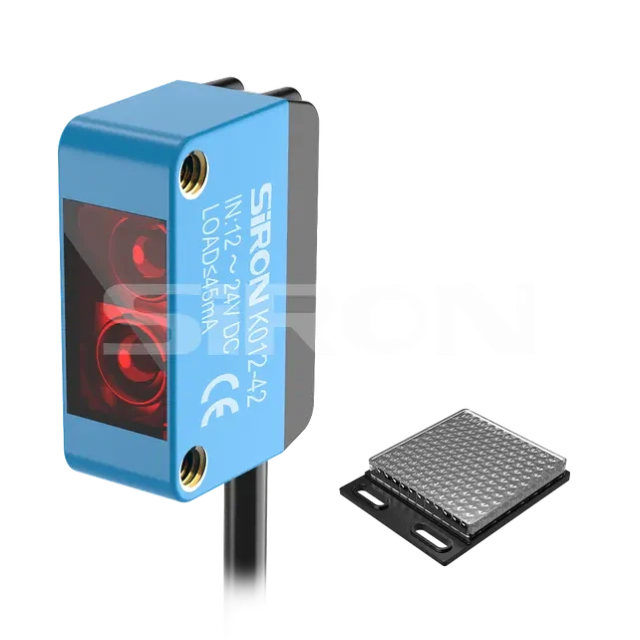
The use of magnetic switches offers a significant advantage in measurement accuracy, especially in applications requiring high precision. Below are the reasons why these switches improve accuracy in industrial measurement systems:
Non-contact Sensing Technology: The primary benefit of magnetic switches lies in their non-contact detection ability. Since there is no physical contact between the sensor and the object being measured, there is minimal wear and tear on the components. This ensures consistent accuracy over extended periods and in harsh environmental conditions, such as high temperatures or in the presence of dust and moisture.
High Precision and Reliability in Harsh Environments: Magnetic switches are ideal for use in environments where other sensors might fail. Whether it’s exposure to extreme temperatures, humidity, or chemicals, magnetic switches are highly reliable. Their rugged design and ability to function in such conditions make them an excellent choice for industries like manufacturing, chemical processing, and automotive production.
No Moving Parts: Magnetic switches generally have no moving parts, reducing mechanical failure and increasing their longevity. This inherent durability makes them highly suitable for applications where high-speed, continuous operation is required without maintenance interruptions.
Fluid management systems require precise and reliable methods for monitoring liquid levels, especially in industries like oil and gas, chemicals, and water treatment. Magnetic switches are an essential component of such systems due to their accuracy and durability.
Enhancing Liquid Level Detection: In many industrial applications, liquid level detection is critical. Magnetic switches are often used in conjunction with float switches to provide highly accurate liquid level monitoring in tanks or containers. Their non-contact nature ensures that the float mechanism is not subject to wear, providing a long-lasting solution for continuous level monitoring.
Integration with Capacitive Sensors for More Accurate Monitoring: To achieve even more accurate monitoring, magnetic switches can be integrated with capacitive sensors. This hybrid approach ensures the monitoring system is robust and capable of handling complex liquid monitoring applications. Capacitive sensors detect changes in the dielectric constant of the liquid, while magnetic switches monitor the physical position, creating a comprehensive liquid level measurement system.
As industries continue to advance and automation becomes more sophisticated, magnetic switches are evolving to meet new demands. Here are some trends that will shape the future of this technology:
Development of More Sensitive Sensors: With the advancement of materials and sensor technology, magnetic switches are becoming more sensitive and capable of detecting smaller and more subtle changes in the magnetic field. This will expand their application in industries where precision is paramount, such as semiconductor manufacturing or high-precision robotics.
Potential for Use in Advanced Industrial IoT Applications: As the industrial internet of things (IoT) gains traction, magnetic switches are expected to become integral components in smart factories. These switches can integrate seamlessly with IoT platforms, providing real-time data and enabling predictive maintenance and remote monitoring. The development of wireless communication capabilities will further enhance their use in complex, interconnected industrial systems.
Miniaturization of Magnetic Switches: As industries demand more compact solutions, magnetic switch technology is likely to see further miniaturization. Smaller sensors will allow for greater flexibility in installation and increase their use in tight or constrained environments.
In conclusion, magnetic switches are an essential component for distance and level measurement in industrial automation systems. Their non-contact sensing technology, combined with their durability and precision, makes them the preferred solution for many industries. Whether used in liquid level detection or position sensing, magnetic switches provide accurate, reliable, and long-lasting results. To explore high-quality magnetic switch solutions that will enhance your industrial systems, check out the magnetic switch products by SiRON Electrical. Our industrial sensors are designed to meet the highest standards of accuracy and reliability, ensuring optimal performance in even the most demanding environments.
1. What industries benefit the most from using magnetic switches?
Magnetic switches are used in various industries, including manufacturing, water treatment, oil and gas, and automotive, particularly for liquid level detection and position sensing.
2. How does a magnetic switch differ from a capacitive sensor?
While magnetic switches detect the presence of magnetic fields, capacitive sensors measure changes in the dielectric constant of materials. Magnetic switches are ideal for non-contact position detection, while capacitive sensors are better suited for monitoring the level of liquids or solids.
3. Can magnetic switches be used in extreme environments?
Yes, magnetic switches are highly reliable in harsh conditions, such as high temperatures, humidity, and chemical exposure. Their rugged design ensures they continue to perform reliably in challenging environments.
4. How do magnetic switches improve system efficiency?
By providing precise, non-contact detection, magnetic switches help reduce mechanical wear and increase system uptime, leading to higher efficiency and fewer maintenance requirements.


